
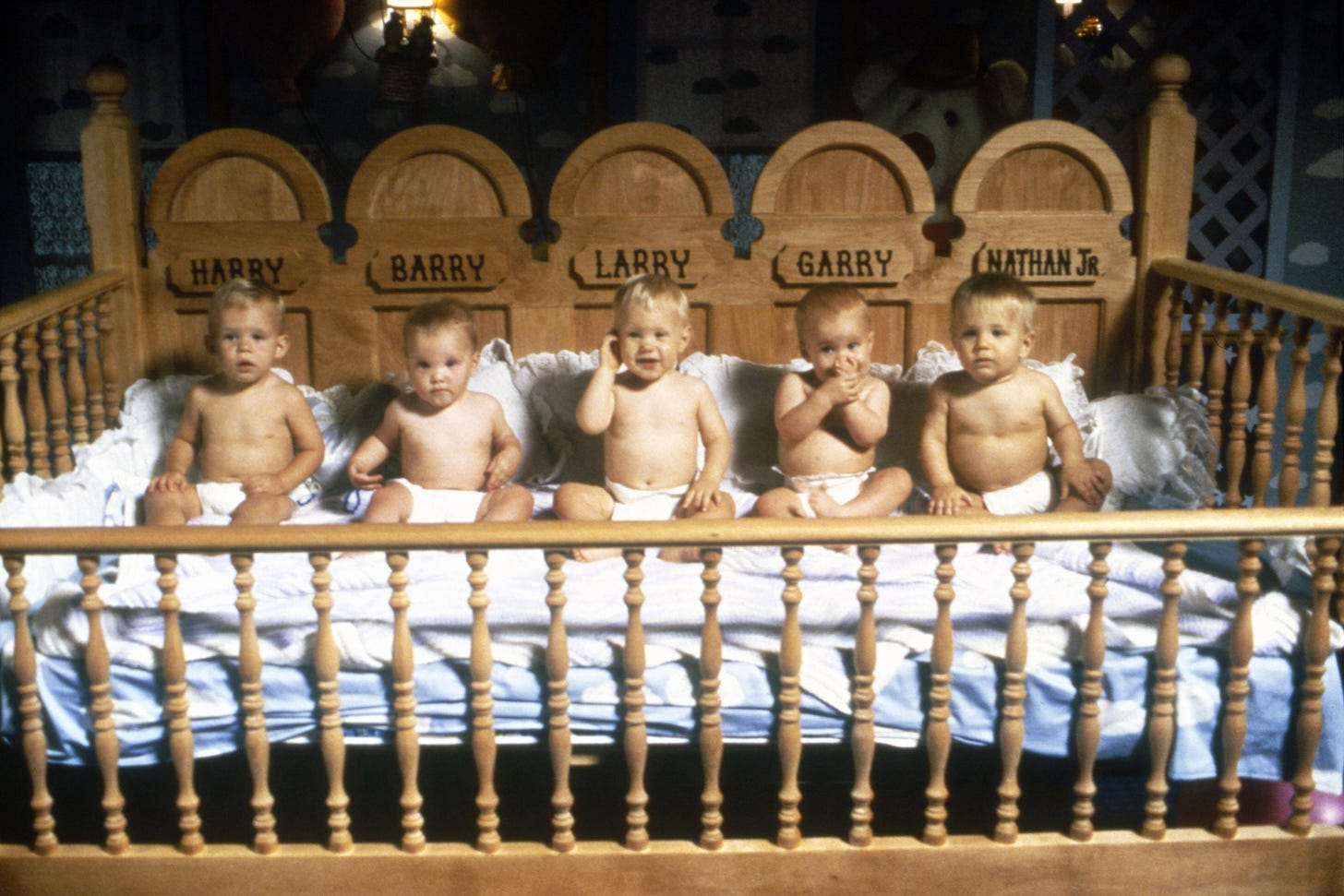
Photo: PHOTO12/Circle Films/Melinda Sue Gordon
ARIZONA, RISEN chapter two: 'We Got Us a Family Here!'
'Raising Arizona' turned 40 recently. This is the second installment in a three-part series examining the movie's evolution.
(Ed. note: Read the first part here.)
By Cory Frye
“If you want to see Arizona take it in the neck, you won’t get it from this comedy.”
— Ethan Coen to the Republic’s Marsha McCreadie, as published Sunday, Nov. 17, 1985
First, a slight reverse: Before the Coens could secure the shuttered Carefree Studios, Debbie Knoblauch had to direct them to it.
Raising Arizona was one of her first location scouts for the City of Phoenix Film Office. Back then — fall ’85 — she’d entered her fifth year as a coordinator under agency head Luci Perez. The screenplay came, and she pored through it (“I loved it,” she enthuses), firing off pictures of places to shoot.
“When you’re reading a script,” Knoblauch explains, “it’s painting a story. You’re imagining what locations could work, whether for a commercial, print ad, or movie. I was fairly new to the job, but I’ve lived here a long time, so I was just using my imagination. When they describe a house or something, I can determine what they may be looking for because I’m familiar with the area. I give them some options, because sometimes they’ll say, ‘Oh, that’s great, but what about this?’”
The Coens first glimpsed Arizona as they landed at Phoenix Sky Harbor International Airport. Snow would pelt the Valley on Dec. 11, 1985, its first such outburst since 1939, but the desert winter, as usual, was just summers in longer shirtsleeves. No matter the weather, Knoblauch was waiting. Everyone — location manager David Pomier, too? She couldn’t remember — then piled into her car for a multidimensional tour they’d previously seen only in Polaroids.
Most of these spots live in the finished film, albeit trapped in ’86 amber. The home of les parents Arizona — its living room detailed in prose as “dominated by a large oil portrait of Nathan and Florence, gazing out from the wall over the mantlepiece” — breathed money, so Knoblauch showed them the historic Jokake Inn on Camelback Mountain’s southern slope, its Pueblo Revival contours soon pinned to the grounds of Scottsdale’s incoming Phoenician resort. Nathan’s massive Unpainted Arizona slumbered within the Home Depot on Cactus and Cave Creek roads in Phoenix.
A Short Stop convenience store, yonks before it morphed into Circle K, made fine turf for Hi McDunnough’s botched robbery. The Old Phoenix City Hall, closed for renovations, nevertheless welcomed Raising Arizona. Its rooms would host an adoption agency and Hi’s parole hearings (Barry Goldwater, rendered in august strokes, observed in monarchical silence from his side-wall frame), offering refuge from weather and replicating locations when necessary.
The exterior of the 24th Street Water Treatment Plant became what Hi indignantly called the Maricopa (“Munroe” in the script) County Maximum Security Facility for Men, State Farm Road No. 31, Tempe, Arizona — though Tempe’s almost 11 miles from Phoenix, where the edifice was actually shot. As for State Farm Road No. 31, well, good luck finding that.
Knoblauch shuttled her passengers down Scottsdale Road, pulling into Carefree Studios, its bones stilled, baking in blank desert yet only 20 minutes from the ’80s. Each room bore a name, linked by dark walls. “Dick Van Dyke,” one announced. Yet the star never showed.
A little more Carefree
Danny MacCallum remembers when Dick was there, and life was there and the studio moved like a fine machine. The genial Van Dyke commuted five minutes at best from the 82-acre spread he owned in Cave Creek, a ranch he’d christened Hidden View. He lived blissfully amid neighboring saguaros, no interest in Hollywood’s hubbub.
So, before The New Dick Van Dyke Show rolled toward its fall 1971 CBS premiere, most of its associates came to him. As its namesake, *he *could stay put — Arizona was its setting — operating out of what was then known as Graham Studios, opened by actor/stuntman Fred Graham some three years earlier.
Forty-eight of the multicamera sitcom’s 72 episodes taped Thursday nights before an audience inside Graham’s Stage 1. Danny was usually around, too — out of the way, of course — backstage with his father, William, a set lighting technician.
A longtime Arizonan and machinist, William knew nothing of a state film office. For good reason, as it didn’t yet exist. Such lofty futures never crossed his mind, anyway.
He’d started his behind-the-scenes showbiz career in Hawaii — wife Alice’s decree, as per Danny, then just 7 — after a Navy Reserve stint. When Tinseltown hit the islands, he worked everything from the star-studded romantic war picture (lotta war pictures) In Harm’s Way (1965) and the James A. Michener adaptation Hawaii (1966) to the classic CBS detective series Hawaii Five-O (1968) and Tora! Tora! Tora! (1970) before returning to Arizona.
“I got my original training on the set of Hawaii Five-O,” Danny recalls. “I was nine. That’s when I decided what I was doing for a living, and I never looked back. Those guys had so much fun, which I thought was great. It precluded me from having to say, ‘I have to go to college now,’ which I didn’t do. I amassed no student debt. I got trained on the job and paid for it, too. The scenario was perfect.”
After completing shows, the Van Dyke cast and crew assembled in the studio’s “Electric Room.” Everyone burned leftover production energy until night surrendered to morning, as outside temperatures began climbing to 115 degrees. This was the desert, after all, “my favorite desert in the world,” Danny proclaims, which meant climate-appropriate scenery, little of it breathtaking: ever-present rattlesnakes, dead cattle strewn up Scottsdale Road. Strange attractions for TV folk. No one emerged from, say, 12 weary Laugh-In hours at Burbank’s NBC to traffic-crushed jackrabbits at Olive and Alameda.
Fred Graham and William MacCallum weren’t long for this prosperity. By the time *Van Dyke *aired Sept. 18, 1971, both were elsewhere, yet together.
Though the studio bore Graham’s name, he’d left three months earlier, on Tuesday, June 15. “I submitted my resignation last Jan. 7, but they didn’t act on it,” he said of Phoenix’s Southwestern Research & General Investment Company, parent to Graham’s Cine Logistics Corp. subsidiary, “They’d rather fire you.”
Van Dyke’s Cave Creek Enterprises remained on the property until his series’ second-season move from Saturday to Sunday nights resulted in fallen ratings. Back to Hollywood it went, with cast changes to wheeze through a third, its last. (1) Graham Studios became Southwestern Studios, then Carefree.
Graham and MacCallum had already recovered. Barely a month after the former’s exit, Arizona governor John A. “Jack” Williams, hoping to lure more productions a wee further east, named him motion picture development coordinator for the State Department of Economic Planning and Development. (Williams’ executive order 73-6 would establish the Arizona Film Commission in 1973.)
As Danny recalls, following his appointment, Graham rang up his old friend. Come be my assistant film commissioner, he wooed. Skeptical, William hesitated. He wasn’t a desk guy. Graham assured him he’d have no time to sit behind anything ’cause he’d be out looking for places to shoot, securing permits, and, with Graham, pushing Arizona as entertainment heaven during alternating L.A. trips. “Sure,” the reluctant man acquiesced. “I’ll give it a try.”
The partnership worked. When Graham reached mandatory retirement age in 1976 (having treaded boards since the days of celluloid nitrate), William MacCallum made a natural successor. Well, almost. First, there was the naming and quick resignation of Jeff Sneller, son of Tucson’s Sam Sneller, who helped raise funds for incoming Governor Raul Castro’s election. But after the younger Sneller bailed, William settled into his earned office, where he’d remain for 22 years, outlasting even the soundstage cathedral where he and Graham met.
**Raising **Arizona
In 1985, of course, the complex was a long-faded vibration, mute but for the trio exploring its grounds.
“Carefree was a beautiful property,” Knoblauch says. “I told the Coens, ‘It’s good to have a studio.’ I don’t know how it was for them in terms of the facility, but it worked, and they shot there.
“I liked them,” she continues. “They were very creative. The dynamic was different compared to a Hollywood-based production, though that isn’t bad, either. When you’re working with companies from back east, they have a more independent, artistic style. They kind of keep to themselves. But they were really nice to work with. A delight, actually.”
After spending a few days in Arizona, the Coens returned to New York. But they’d be back soon, this time with principal cast and crew.
Screenplay muse Holly Hunter was already in. In fact, she later said she stopped reading her copy to grab the phone and deafen them with “yes.” So, absolutely, she’d be Edwinna.
Nicolas Cage flipped, too. This fit his flavor: weird, cool.
Despite being one of the production’s youngest grownups at 21, he was by far its biggest name. He’d recently finished his uncle Francis Ford Coppola’s Peggy Sue Got Married (1986), pushing a deliberately nasal affect past ridiculous fake teeth to annoy Kathleen Turner, his lead. That was to be expected, however: He’d built by then a resume on more citified weirdos and odd on- and off-camera behavior. Which, of course, made H.I. “Hi” McDunnough all the more alluring. “[H]e has a rhythm of his own,” Cage said with admiration.
He lobbied hard, maybe even shamelessly. The Coens weren’t sure. Could he master the accent? He reportedly studied by holding court at Gilley’s in Pasadena, Texas, where Urban Cowboy was shot a half-decade earlier. “I wanted the Houston dialect,” he supposed, “’cause there’s really no dialect in rural Arizona.”
John Goodman surfaced after shooting David Byrne’s True Stories (1986) and the accompanying video for the Talking Heads’ “Wild Wild Life.”
His didn’t sound like an “audition.” “[W]e just goofed around for an hour,” he told The Hollywood Reporter’s Ryan Gajewski in 2025. “I got the role, and a lot of my other friends that went in just couldn’t believe it because I didn’t have that much experience.” Thus began a decades-long association that has since covered Barton Fink (1991), The Hudsucker Proxy (1994), *The Big Lebowski *(1998), O Brother, Where Art Thou? (2001), and Inside Llewyn Davis (2013).
But for this, their first collaboration, Goodman’s Gale Snoates — one of two fugitives and novice baby-nappers — needed an accomplice. In walked William Forsythe, better known then and even now for hardened goons in more dramatic storylines; his most acclaimed role at that point was gangster Philip “Cockeye” Stein in Sergio Leone’s Once Upon a Time in America (1984), though his punk-rock hooligan screaming “I Dig Pain” performance.
In a 1982 CHiPs episode should not go gently. Forsythe became Goodman’s onscreen brother, Evelle, an all-too-rare comic turn. They meshed perfectly, the Coens later reflected, two destructive babyfaces in need of care and discipline.
Rounding out Raising’s main cast: Trey Wilson — the former Donald Yearnsley Wilson III — assigned Nathan Arizona, née Huffhines; and professional heavyweight boxer Randall “Tex” Cobb as the brutal Leonard Smalls. Joel Coen called him a “force of nature,” a truth beyond fiction.
As the Coens had written the part for her, Frances McDormand played the bubbly Dot, half of a twosome with Sam McMurray’s Glen. McMurray knew John Goodman already, even worked with him in 1984’s C.H.U.D. His audition went just as smoothly as his colleague’s, as he related to Phoenix magazine’s M.V. Moorhead for a 35th-anniversary piece. “It was one of those ‘No Secret’ roles,” he elaborated. “My mother [Jane Hoffman] was an actress, and she always talked about ‘No Secret’ roles, where when you read them, you just know how to play them. I was reading, and Joel and Ethan were sitting there like bobblehead dolls.” (Glen is truly unthinkable without McMurray’s overweening confidence and odiferous jokes.)
Casting widened across the Southwest, where the picture found physician, singer, and actress Lynne Kitei for Florence Arizona, mother to the famous quints. KPHO TV5 movie critic Bill Rocz went momentarily widescreen as a newsman announcing their birth.
Yet there was one last, essential role left. Without it, there could be no movie.
‘More’n they can handle!’ (Babies by the Hundreds Descend on Scottsdale)
“We are currently looking for three babies, all of whom will play Nathan, Jr. In addition, we will also be casting understudies to fill in for the three chosen. … Although we cannot stress any harder the serious commitment required … we also want it to be a pleasant experience for everyone.”
— Raising Arizona producer Mark Silverman’s letter to “expecting” parents, early 1986
Accounts reveal that the Coens began production on Monday, Feb. 3, 1986. Julie Asch Smith spent that and the next three days inside a Scottsdale Airpark warehouse, leading interviews for Arizona’s catalyst, Nathan, Jr. (The main company, now calling itself Circle Arizona Production, Inc., headquartered in a nearby plaza at 14441 N. 73rd St.) This took considerable effort, as hopefuls lacked resumes, chops, or the ability to form words. “Does your baby have star potential?” asked a January 15 ad in the Arizona Republic. Parents were convinced that answer was yes, and they called a listed number in droves.
Many came swagged like Sears Portrait Day. Tiny suits and ties dotted the waiting area. “Twins are especially preferred,” read the ad’s fine print, so oh, did they come, often matched down to socks, shoes, and spectacles. Sailor garb extended to infinity. At least one tot was so burdened by layers beneath her dress she could barely sit. The going rate, according to paperwork, was $35 per day for the baby and $90 for a parent over a 30-day period, which would include perhaps two and a half weeks of night shoots.
Asch Smith reviewed candidates in a smaller, separate — and much quieter — room. Among its most elaborate decorations: toys as props and distractions, plus a Care Bear blanket atop a card table, where she’d sit a baby, snap a picture, and videotape each five-minute session for Joel Coen’s benefit.
Plenty wouldn’t make it that far, as Asch Smith posed questions tailored to the film’s needs. After all, these were peculiar circumstances for any six- to 12-month-old. Are they better in mornings or afternoons? The script requires crawling; does he or she still do that? (Walkers were, delicately, shown the door, as were firstborns.) What scares them? Would a motorcycle qualify? How are they around strangers? Men? Women? Any birthmarks? Teething? Eating habits? Nap schedules? Feeding times?
Some mothers tried wriggling past hitches, upselling their cherubs as well-heeled miracles. But Julie Asch Smith was no fool, a mother herself with two teenagers at home. Daughter Tiffany, in fact, worked on Raising Arizona’s sets while son Jeffrey auditioned for the bit part that went to Keith Jandacek of Phoenix: a counter jock named Whitey, who rebuts Hi McDunnough’s Short Stop holdup with a Smith & Wesson Model 629. (TV viewers may recognize Jeffrey as Saved by the Bell’s Maxwell Nerdstrom, so his perseverance soon paid off.)
Beyond her affirmed parenthood, she was by now an expert at casting and understanding babies. In fact, that was her job as a pediatric nurse who somehow found her way into commercial shoots for producer/director Bill Linsman of Scottsdale’s Linsman Film and Tape.
Initially, she diagnosed and fixed on-set booboos amid 30-second pitches for Huggies, Pampers, and Johnson & Johnson. Then, as she recalls, “Bill had an ad with 30 eight-month-old babies dressed in three-piece suits and sitting in a triangle. They didn’t have anyone on set, and the director was having a tough time trying to keep them upright. They kept flopping over. He kept saying, ‘Cut, cut, we’re not going to get this.’
“So I’m just standing there, watching. When the last kid was set, and they started shooting, I stamped my feet, loud, on the floor. All 30 babies looked up. Bill Linsman yelled out, ‘Who did that? Who did that?’”
Asch Smith laughs at the memory.
“That was my ‘in,’” she continues. “I started going with Bill all over — Mexico City, anywhere they were casting babies. That’s where I got the term ‘baby wrangler.’”
This seems to have been her distinction in a 20th Century Fox directory, where independent film producer Mark Silverman found her. Having worked on Blood Simple, he was aligned with the Coen brothers, who could surely use her services now. He reached out first. Then came Joel.
Naturally, Asch Smith didn’t recognize any of these people. She hadn’t seen the Coens’ debut and couldn’t imagine working a feature. But Joel quickly mollified whatever reservations she expressed. “You came highly recommended,” he said. “I’ll send you the script. Read it. Watch Blood Simple.” She did both but didn’t understand what one had to do with the other. They were of two completely different tones.
“I was a nervous wreck,” she says. “He sent me all the storyboards for the baby. When I looked at them, I realized it was almost like the diaper commercials, just getting the babies to do different things.
“I’d just lost a baby about a month before he called me. So my [then-] husband [Richard] kind of coaxed me into it. I went to the interview with Joel, anyhow. They were so like family that I thought, This is nice. It’ll be a three-, four-month job. That’s how I got it.”
A few weeks later, she camped behind a Scottsdale Airpark card table staring into dozens of expectant eyes. (Brief support came from Yvonne Van Orden, right hand to New York’s Josef Schneider, a veteran baby wrangler with extensive credits.) Despite her big-screen inexperience, however, Asch Smith knew what she was doing, locking her poker face down while recording impressions across page after page after page after page. “CL” was shorthand for “clinger.” Small or big, those didn’t work; in many ways, auditions were just as much for parents, who were* not* allowed on set. Therefore, even moms left scarred with an “APP,” for “apprehensive.” “L” referred to a child’s size. “NFU” meant “not for you.”
She kept a list of candidates — even twins and triplets to satisfy Joel, who observed the filmmaking edict that on-camera babies be swapped for siblings when necessary — but everything changed on Day 3. It was the afternoon, around 2:45 p.m., when Tom and Rhonda Kuhn entered with their eight-month-old boy, clad in nothing more extravagant than a mini-jogging outfit.
Tom had seen the Republic ad first. “We are looking for happy babies,” it explained. “All babies should have a cheerful disposition.” The Madison Street Jail detention officer immediately thought of his son, Thomas Joseph, Jr., or simply, T.J.
“I thought it’d be kind of fun,” Tom recalls, “so I talked to Rhonda about it, and we took him.”
If Raising Arizona wanted happy and unflappable, T.J. made both look natural. He didn’t study these traits under Stella Adler, but inherited them from his parents, neither of whom dressed or described him like plush seating in a luxury car. Not a whiff of Hollywood on them. Their kid was no sailor, banker, gangster, or gadabout, but an actual baby in line with the Coens’ desired “generic” look. Not that T.J. wasn’t adorable, but maybe you’d coo briefly in his presence before moving along, and maybe he’d take you in without a sound. He was also blonde, a requirement for the five male offspring of Nathan and Florence Arizona.
As Asch Smith discovered during subsequent callbacks, he didn’t mind being taken from his parents — who’d wave theatrical but universally understood “bye-byes” — to fill complete strangers’ arms. No separation anxiety whatsoever.
“He was calm, he was easygoing, he was self-occupied,” she says, “Rhonda and Tom were the same way. I bonded to him immediately. When you think of all those babies, I don’t know why I felt so strongly about him except that I knew he would work out.”
“T.J. got along with everybody,” says his mother, Rhonda Johnston. “He didn’t care.”
As Joel Coen and the baby wrangler reviewed the boy’s footage, the director reiterated that he needed at least two babies to pull off one. Triplets, remember, were also ideal. Asch Smith didn’t agree. “No. 1,” she explains of the latter, “when they’re born, they’re the biggest deal in the world, so they’re spoiled. They don’t listen. They’re usually fussier.”
T.J. listened. Fussy: barely in his repertoire. Present him a face he didn’t know, fine. The only real drawback was that he scooted more than he crawled, easily remedied with stunt babies. They’d have one of those in Cody Ranger, a Lamborghini on all fours.
No matter Joel Coen’s misgivings, Julie Asch Smith always went back to T.J. Finally, she told the director, “I’d bet my life that we could keep him.” She did cast twins, though: Emily and Melanie Malin. Easygoing, too, plus they’d come in handy.
Fifteen babies would pass through production to play the central quints.
But of the final five, T.J. Kuhn was the One.
‘Nathan, Jr., I think’
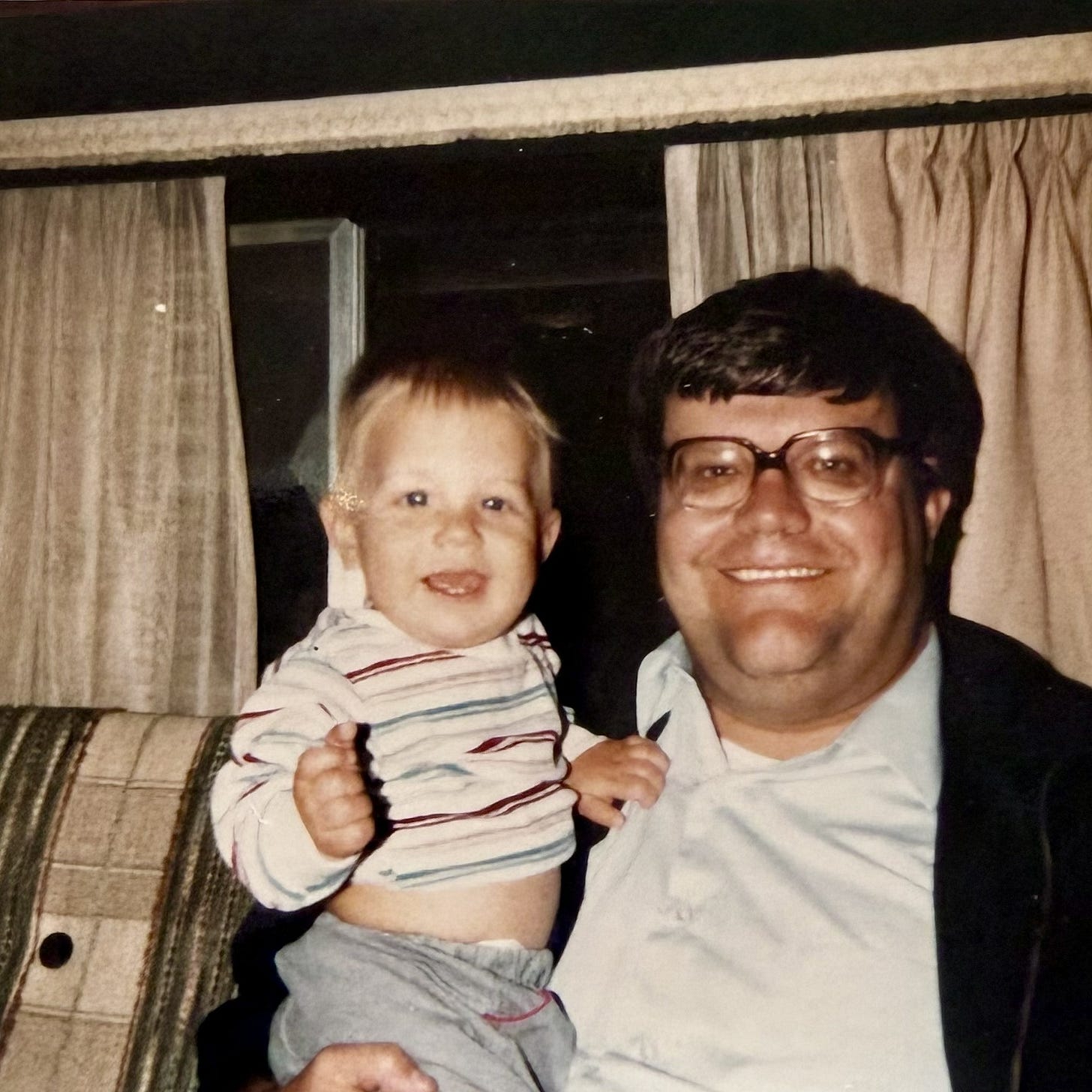
I reach out sheepishly. How many of these retrospectives has he endured? A Google search returns multiple stills of his only real film performance, primarily that iconic one of him, unscathed, unbothered, after (not onscreen, of course) flying off a car’s hardtop. There he is, caught in time, kicking his tiny legs from a baby seat in the middle of a desert road.
But this has been T.J. Kuhn’s life, for most of his life, so he takes such oddness in good-humored stride. “This movie keeps poking its head out of the ground every so often,” he replies, then graciously offers to help me reach other Raising Arizona vets. So, interestingly, he’s the focus of and oft-first contact for a cinematic adventure he can relive only through others’ memories. When I offer to send him what I’d written to the point of our initial correspondence, he accepts, explaining, “There is a lot of random stuff I’ve learned about the movie within the last couple of years, so I’m curious to see if you have that info, too.”
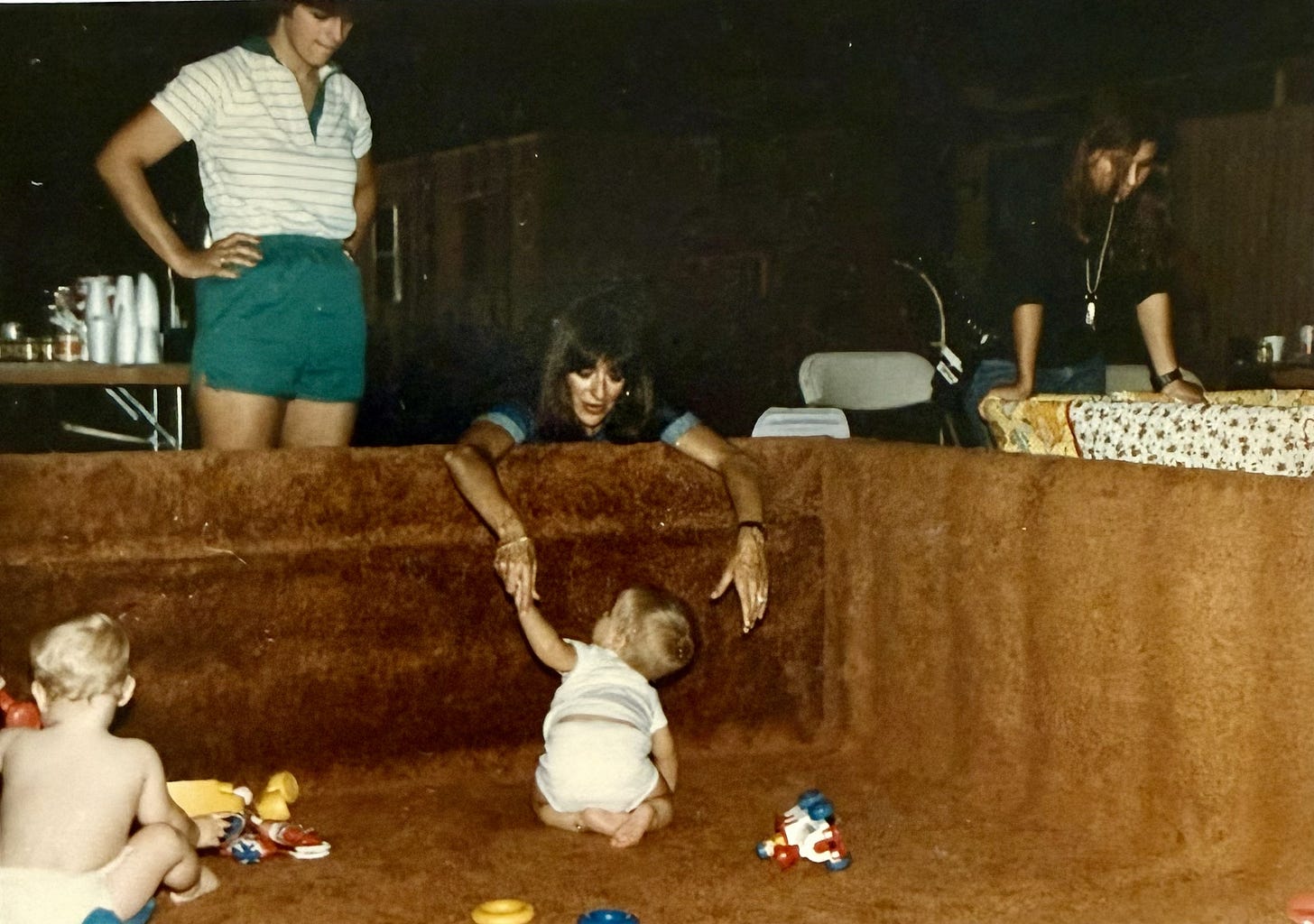
He may remember zilch — “exactly that: nothingness,” he tells me when we speak, though in his mind he imagines a massive play area for his fictional kin, maybe hugged in brown carpet, unsure if that’s real (it was, this infamous Carefree “baby pit”) or just something he’s conjured from photographs — but he was very young when he learned that his past contained a motion picture.
“I’ve known my whole life,” he says. “My whole life. My dad never let anyone forget. He’d buy memorabilia on eBay when that was big in the early 2000s. We watched it all the time. Teachers knew I was the baby in that movie. It was always known. So it was never lost on me.”
Asch Smith uses adjectives like easygoing to describe T.J.’s demeanor. So do his parents. So does he. As evidenced over a 40-minute conversation, it’s an attribute he’s carried into adulthood. Although interviews have increased with each anniversary, he regards his cultural status with level-headed bemusement, despite being uncomfortable speaking for the record. How did he become a spokesperson?
He’s not a performer. He’s a realtor. That’s his jam. Earned his license at 18, right out of high school — class of 2003, Mountain Ridge, Glendale, home to the mighty Mountain Lions. Started with land sales in Bullhead City and now works the urban market around Phoenix. Condos and high-rises from the capital to Scottsdale and Tempe.
Acting? Never in the cards. A couple of early commercials, but no class plays or indie films, not even a guest cameo somewhere for novelty’s sake. Let those people hack press junkets. When, in 2014, the Today show invited him and his folks to New York to reminisce about his only film, he exuded charm in a shirt and tie but would rather have been a million miles from Savannah Guthrie’s cameras. Don’t ask me any questions, he silently prayed. I will blank out and puke in a bag.
So, Nathan Jr.’s always around, that quiet, towheaded little guy. Clients often unearth this nugget in research: “Are you?” Even if he demurs, his father’s too proud to let that info vaporize. “You know who this is?” he’ll ask anyone. “At the end of the world,” T.J. jokes, “there’ll be cockroaches and Raising Arizona.
“I love it, though. It’s cool. I didn’t know how big it was until I saw all those names. Nicolas Cage. Holly Hunter. John Goodman. I randomly looked up the movie on YouTube once, and there’s Macaulay Culkin talking about it. Wait, what? He knows what this is? Unfortunately, it takes being a grown adult to realize its significance.”
Shaky cams, prop guns, wild in the streets
Raising Arizona electrician Bob Field told Danny MacCallum about the job. They’d met very recently, on sets for O.C. and Stiggs (1987), a *National Lampoon *derivation that its director, the renowned Robert Altman, might have preferred you’d forget.
But this one felt more promising. So Danny, like his father before him, joined up as a set lighting technician, one of a slate of locals embedded within Californians and New Yorkers. Most — including Danny and Field — came as members of the International Alliance of Theatrical Stage Employees, Moving Picture Technicians, Artists and Allied Crafts of the United States (IATSE). Some carried no union affiliation.
Danny says everyone got along, listing electrician Michael F. Burke and gaffer Russell “Rusty” Engels as “great guys, all really good to us.” Memory, however, prevents them from agreeing on specifics.
For instance, according to Burke in Michael Lee Nirenberg’s Cinematic Immunity: An Oral History of New York Filmmaking as Told by the Crews That Got the Shot (Feral House, 2026), the Coens spent Monday, Feb. 3, 1986 — the production’s first day — at Lost Dutchman State Park in the Superstition Mountains. There, the McDunnoughs enjoy an ostensibly peaceful picnic with the brood of Hi’s foreman, Glen. An otherwise moral man despite a tendency to rob stores if options A, B, or C fell short, Hi takes extreme offense to his boss’ spouse-trade suggestion, enough to stage-slug him and Nic-Cage seethe, “Keep yer goddamn hands off my wahf.” Shocked and wounded, Glen flees face-first into a cactus — luckily for actor Sam McMurray, the only artificial, trucked-in plant on the whole hill.
Danny MacCallum witnessed this sequence, even though he didn’t start ’til later in production. He arrived in time for one of Arizona’s best moves, when Blood Simple cinematographer Barry Sonnenfeld sent a “shaky cam” up Nathan Arizona’s yard — the Jokake Inn’s, really — cleared a fountain in one easy leap, then scaled a ladder to another floor’s window in one fluid shot. “One thing that always sticks in my mind about it,” Danny says, “is that there’s a geyser on the frame’s right side, a broken main, with water shooting about 1,000 feet in the air. It’s plain as day.”
He remembers commandeering residential blocks in Scottsdale. For what he ominously abridges to “three weeks of nights,” Arizona poured camera-weaponed personnel, police cars and other vehicles, the on-foot Cage, unchained dogs, and one hopelessly wrecked Huggies pack down McDonald Drive and Granite Reef Road and through at least one house. Such was the manic aftermath of Hi McDunnough’s failed convenience-store holdup.
The area was just as mad, film crews hauling 125-foot Condors (straight-arm cranes to lift motion-picture equipment and handlers high enough, maybe, to graze the moon) to capture gunfire, excited animals, and tires burning rubber all night long for roughly five minutes of film. The locals dug the ruckus, watching this weird World Series from front-yard lawn chairs.
Composer Carter Burwell visited during this stretch. Earlier, he’d birthed a beautifully hypnotic score for the Coens’ Blood Simple, but what he watched now eluded him. Ethan had said he was probably the wrong choice, and Ethan was probably right. What’s the proper tempo for a day player offering ridiculous-but-unforgettable observations like “Son, you got a panty on your head”? This called for something Carter couldn’t translate musically. “I loved the script,” he wrote, “but it’s true that I have no affinity for country music or other things Western. But I did want to give it a try.”
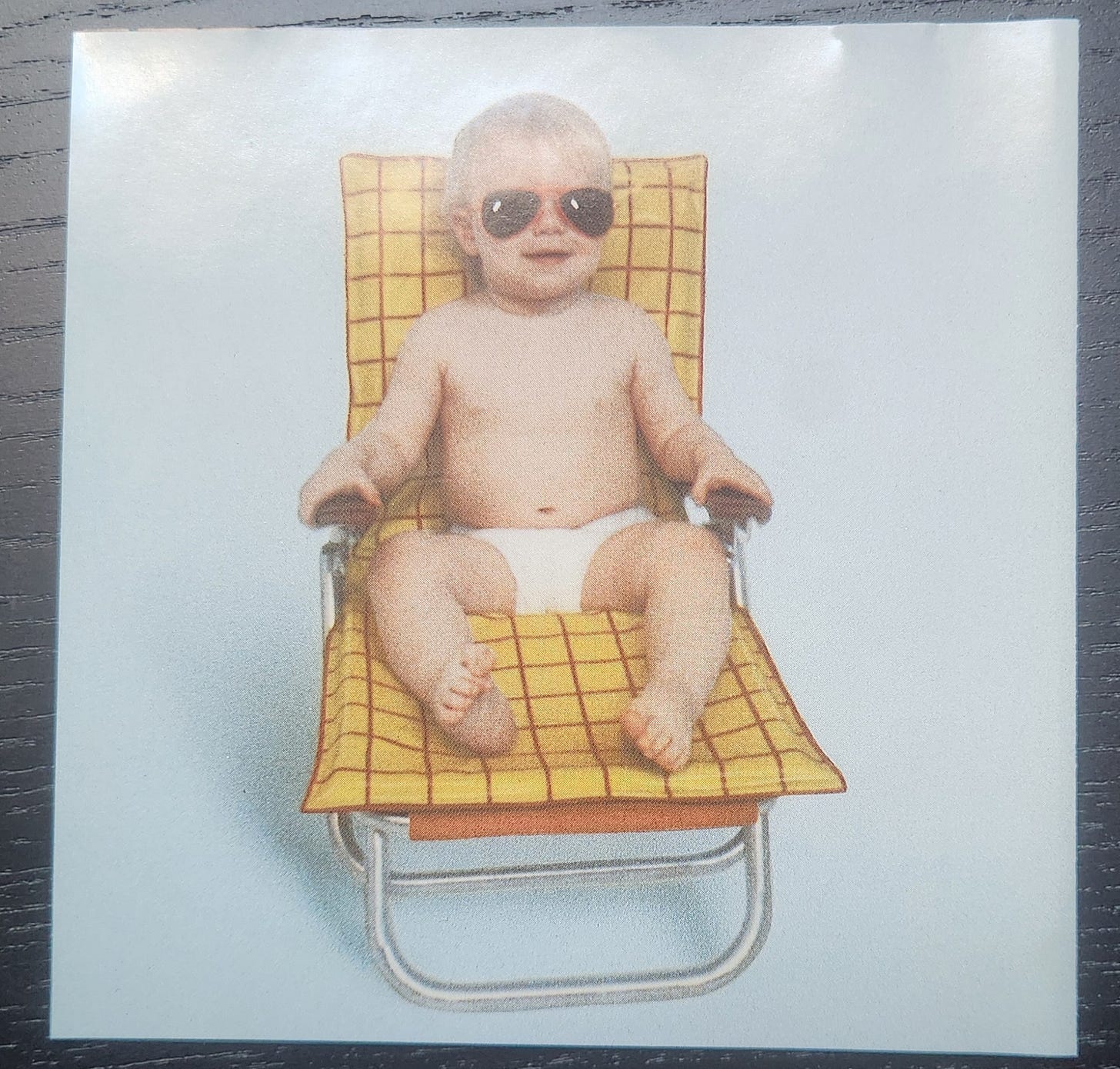
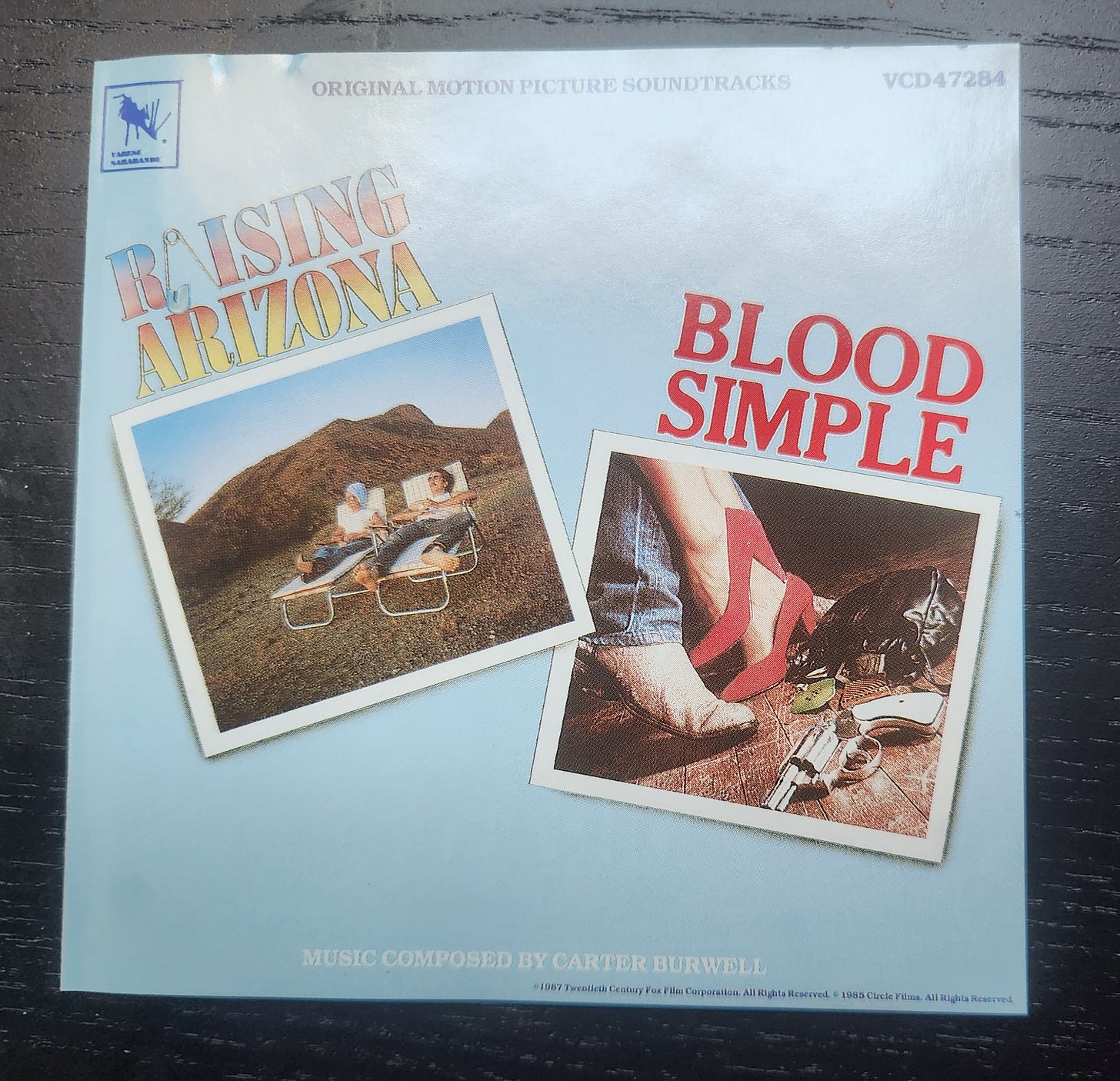
As Burwell weighed approaches, yielding one of the decade’s better soundtracks, the Arizona crew routinely wrapped as dawn threatened their reverie. Instead of crawling into their respective beds, though, everyone, high on youth’s indestructibility, beelined for rented diamonds at Scottsdale’s Eldorado Park to belt and chase softballs until noon. Exhausted, they’d collapse at home, only to rise at 4 p.m., fall into showers, and report to work by 5.
“This went on for weeks,” Danny says. “Weeks. Boy, we were young and crazy. But, you know, it was the ’80s.”
Crazy came by accident to Florence’s Arizona State Prison Complex when a prop truck expired midway through the gate and drew attention to its cargo: unexpected clutter for door-to-door delivery. Prop guns. Propane tanks. Internal alarms exploded among non-incarcerated staff. Word reached the warden, who then reached Arizona Film Commission head William MacCallum and unlocked a tirade bent for hell. *Do these people not understand the RULES? *Tempers soon settled, and filming resumed on site.
However, when it came time for Gale and Evelle Snoats to escape prison, they emerged from rain-softened earth outside Phoenix’s 24th Street Water Treatment Plant. John Goodman and William Forsythe clawed screaming past grimy towels, freeing themselves of county-imposed binds. Or, as Evelle downplays it in poached legalese, “We released ourselves on our own recognizance.” Brother Gale has to translate. “What Evelle here is trying to say,” he explains, “is that we felt that the institution no longer had anything to offer us.”
Deadly off-camera contraptions replicated dramatic lightning to give the cinematic breakout its thrilling, symbolic “birth scene” heft.
“They weren’t like the lightning machines we have now,” Danny MacCallum explains. “We’re talking a very dangerous piece of apparatus that used carbon arcs for lighting. You jam all these together, and the arc creates the lightning. It’s basically a 400-amp dead short you’re trying to control as best as you can. The generator operator would just go apeshit because the generator would be jumping off the ground.”
The electricity would continue.
**Reata Pass, ca. Monday, Feb. 18, 1986 **
A workweek had begun. Baby’s first day. Phoenix stared down a 79-degree high.
T.J. Kuhn was overdressed — don’t blame him; ask Wardrobe — clad in shirt, pants, socks, and shoes, plus a long-sleeved sweat jacket, his head beneath its hood. Worse, he was sitting, separated from asphalt by only a child safety seat down the center line of what was then just plain old North Alma School Road in Scottsdale. The film’s last clash erupted across those lanes, all fistfights and explosions as the McDunnoughs save Nathan, Jr. from men of ill intent.
So, not a safe spot. On one side stood the Reata Pass Steakhouse and Pinnacle Peak Patio, fine dining for travelers down for authentic Southwest grub. A water tower loomed across the street, overlooking the cocktails and packaged goods served inside Grease Wood Flat.
Luckily, Julie Asch Smith was just off camera as a film crew watched. T.J. took no real note of anyone save his wrangler, laser-focused as she chewed gum and blew bubbles for his amusement. It was so hot, she remembers, that her bubbles, upon exploding, would drag landed gnats back into her mouth. He watched the sun catch her diamond ring just so, then followed its glint everywhere. Between takes, she relieved him with a tiny fan and held him when she could.
She was his guide to foreign thrills, but he was *performing *against actions he didn’t understand. He never knew why the Snoates’ stolen station wagon, with its “MONDALE/FERRARO” sticker, parked behind him, then backed up. (On film, the sequence was reversed, to appear as if they’d stopped barely in time after a top-speed run.) Wires attached to his seat yanked him from frame; this represented Leonard Smalls grabbing him one-handed as he roared past on his motorcycle. (Its angry rumble didn’t faze him, thanks to numerous introductions, plus a toy that made similar noises and human “vroom vrooms” from his nurse confidante. A lollipop usually awaited brave survivors.) He was then clipped to the snarling beast like a hood ornament, and, hey, hi, Tex! He knew Tex.
Everyone else knew Tex, too, though off camera the imposing, bearded pugilist — rocking a 43-7-1 record over 16 years — cultivated a difficult reputation. Just ask some of the crew. He was nuts, they said. Frightening, a problem. Well-cast, in other words. They recalled him as an “out-of-control maniac” and “rough character” who couldn’t handle his bike and stole their beer. How would he handle a tiny, helpless creature in diapers? Surprisingly well. “Tex had the gentlest, most piercing powder-blue eyes,” Asch Smith reports. “He was very gentle.”
“That was a hard scene for a baby,” she says of the desert scene, “just sitting there for probably two and a half hours in the heat on the road. During the explosions, we’d take the babies into the steakhouse. Joel was very accommodating. He said, ‘We’ll do all of these first.’ T.J. did so great that day that I remember picking him up out of his seat when we were done and lifting him up in the air.”
“I don’t know if she’ll tell you this,” Tom Kuhn warns me, “but he threw up in her mouth.”
“And what does he do?” Asch Smith asks. “He throws up in my mouth. Oh, Joel laughed at that. My first day. I got home and said, ‘I don’t know if I can do this.’”
But the days improved. T.J. stayed with her before filming, and she quietly studied his tells. His wriggling hands foretold anxiety or overstimulation or the imminence of tears. The silent request was always the same: Get me away from this. She’d pulled him from Holly Hunter’s embrace when the Snoates first arrived at the McDunnough trailer. Too much noise and muddiness. “Hi, it’s 2 in the morning,” Hunter, in character, admonished her husband through a forced smile, and the baby was ready to bail.
Yet he had a ball in the street chase, though he played that at Carefree. Hunter sat to his left on the driver’s side of a partial, nonmoving car. “Hold on, Nathan,” she said. “We’re gonna go pick up Daddy!” Then she twisted the steering wheel hard to the left. No one went anywhere. This was pretend. Kuhn smiled, watching Asch Smith at his feet as she pulled her hood down past her eye. He mimicked the gesture in his own hooded jacket. In the movie, it’s an exciting pursuit involving diapers, guns, and dogs. To T.J., it’s “Peekaboo” with his friend.
“I certainly did love the baby,” Hunter revealed to the Washington Post’s Stephanie Mansfield in 1987. “He was a real fascinating child and brought a real humane aspect to doing the movie. It wasn’t like being on other sets because there was a baby involved, and he had no respect for the camera. He had no awareness of meal penalties or overtime. If he didn’t feel like doing a scene, then we had to wait and have him take a nap.”
Met with his costar’s decades-old assessment, T.J. laughs.
“That’s like anything anyone would say about working with a baby,” he says. “You’re working around their schedule, not the producers’.”
That part was certainly true. A scene with Glen, Dot, and their hellion spawn required Nathan, Jr. to regard Frances McDormand with curious exhaustion after rising from slumber. Small problem: T.J. had taken his own long nap in his trailer — his name on the door! — and wasn’t tired at all. Mini-method, he was way too young and proud to pretend. So his mother, Rhonda, helped make him drowsy, and Asch Smith rocked him back to dreamland so he could reawaken for his close-up.
“I always told Joel, ‘Give me 15 minutes before you need him for a scene again,’” Asch Smith says. “I would take T.J. into the trailer, where I’d play with him or nap him. Every day we’d get notes about what scenes were shooting and what time we had to be there, so I’d go over those myself or with him the day before. But a lot of scenes were hard, because they included other people. Strange people, too, and he adapted beautifully to that.”
Sometimes he wasn’t available. This meant rescuing others from the supervised “baby pit” as stand-ins, excited mothers firing “He’s ready! He’s ready!” as Asche Smith approached. She’d picked many from a Feb. 26-27 audition for the remaining Arizona quintuplets. (Frances McDormand apparently dropped by for those, asking with Dot-like wonder, “Julie, can I watch? Can I sit with them?”) One of the Malin twins, Emily or Melanie, became Nathan, Jr. at least once, in the Holly Hunter “Down in the Willow Garden” lullaby sequence**(2)** and perhaps in a sleep scene near the end, when T.J. seemed too curious to truly lay down.
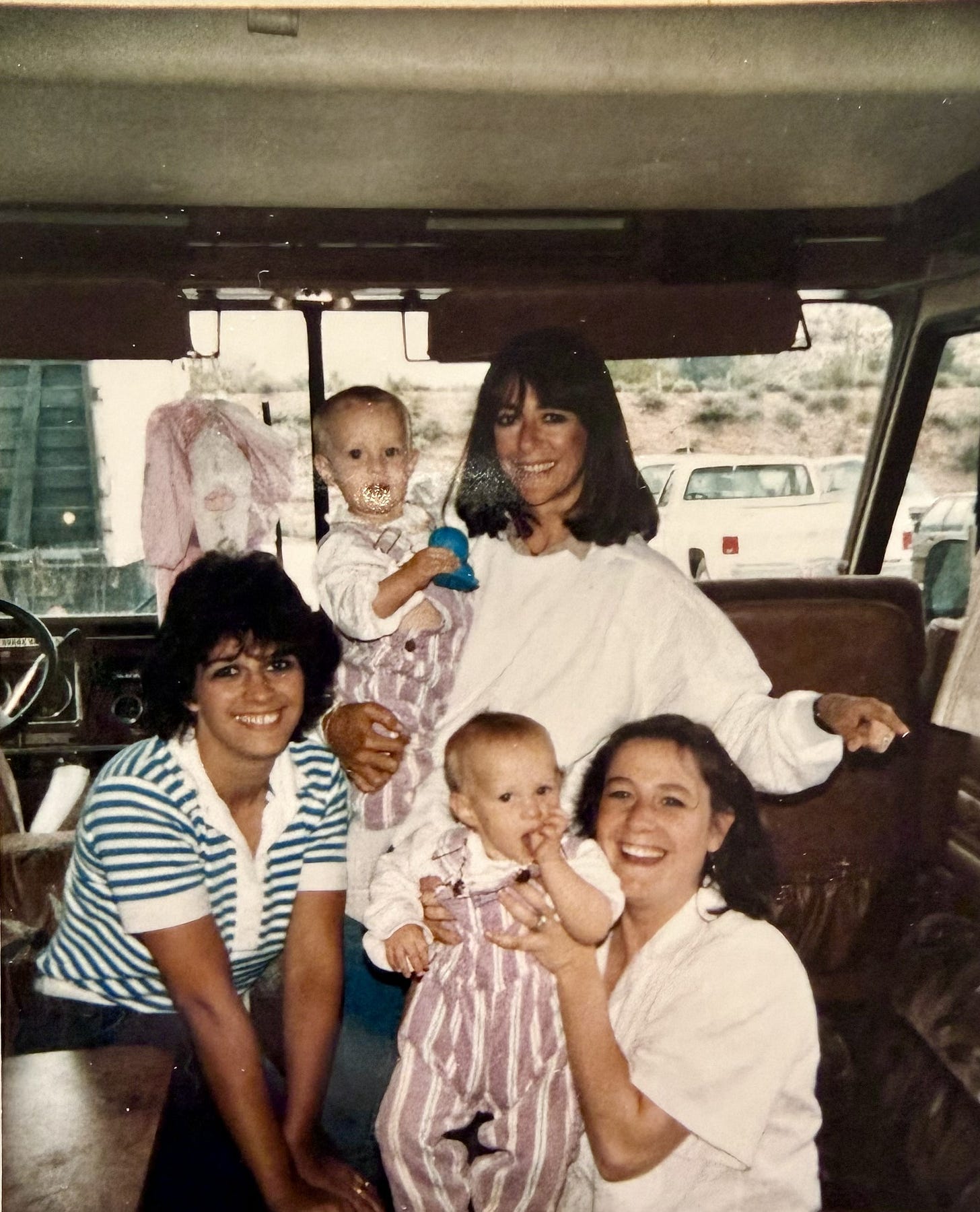
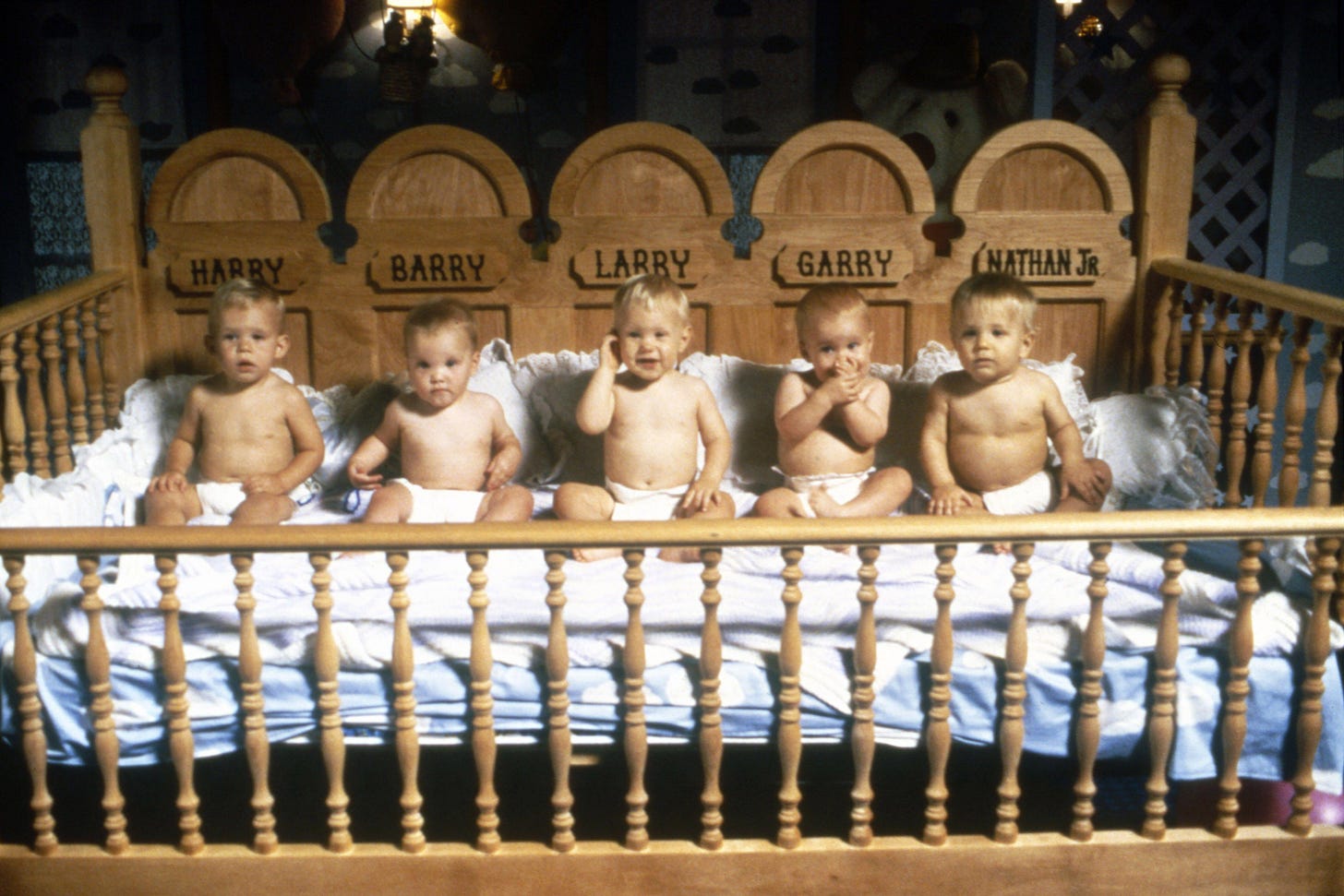
The baby pit emptied for about three days to populate Nathan Arizona’s nursery. Hi McDunnough was expected soon to walk onto the Carefree Studios set, which Danny MacCallum described as extremely very loud, and snatch a tyke from a five-inhabitant crib to set the plot in motion. Asch Smith brought her daughter Tiffany to help grab slippery limbs as she herself crawled across navy-blue carpet, making it all an easy game, spurring her charges to act. Barry Sonnenfeld followed the orchestrated chaos from a dolly, camera grabbing every angle possible. Nicolas Cage fought the flu, aware of protective mothers watching his every move.
“They’re aliens,” he later said of the surrounding tots, some years before he became a father himself. “I’ve never been intimately connected with them before. I never even held one.” (That last part isn’t true, as he lugged multiple in his arms around the nursery, plus T.J. throughout Raising Arizona’s run time. He and T.J. were even photographed together off camera during a rare instance he didn’t excuse himself post-shoot to lock his trailer door behind him.)
It was insane. Asch Smith rolled empty Pepsi cans to draw babies’ gazes in directions they were meant to crawl. (A broken Slinky worked, too, mesmerizingly mysterious.) Young Cody Ranger tracked trails of Cheerios like he was following Hansel and Gretel into a wolfen abyss. He crawled on cue under the crib and into a closet, where he fought his way past a bedsheet, responding as his wrangler rapped the floor with her hands. He even did stunts. Gaffers clutched his arms as Asch Smith lowered him to Nicolas Cage on the floor. In the final cut, Cody appears to take a daredevilish leap from the crib to pummel Hi McDunnough as the hapless babynapper captures a separate escapee. But no one suffered real damage, and Cody loved every minute of it.
T.J. and Asch Smith shared a moment to themselves shortly before the scene’s culmination, with Hi escaping the room as the quints’ mother, Florence Arizona, enters to assess the strange excitement. The baby’s not reacting to Nicolas Cage’s silly expressions outside the nursery window, which is attached to neither a second story nor a house. The baby’s smiling because his handler’s quietly emitting a high-pitched “Peep! Peep!” as actress Lynne Kitei bobs with him.
Asch Smith smiled throughout the whole production herself, recalling daily lunches plopped between Randall “Tex” Cobb and Holly Hunter, who one day confided, “Joel told me he wanted to make me a household name.” The two often worked with T.J. away from the set, as the actress eased into a mother/child dynamic.
Danny MacCallum characterized Joel Coen as high-strung and prone to migraines, the exact opposite of his less intense brother. Asch Smith remembers the latter in constant ambulation as cameras rolled, smoking while patrolling in circles from one end of an on-scene gathering to another. But, she allows, “They were always there for everything.”
This brought to mind a fantasy she wishes she’d indulged. The scene: Hi and Ed return to their tiny trailer after abducting Nathan, Jr. Hi proudly gives his captive the half-minute tour, covering all the cramped highlights. Following the presentation, he deposits the baby atop a patterned-cushioned living room couch (“dee-VAN”), furniture recognized by anyone familiar with ’70s decor. Diapered Nathan takes it all in. At last, he bounces happily in place, approving his new home. Hi cries out, moved, “What? Are you kidding? We got us a family here!” They document the moment via Polaroid Instamatic.
Asch Smith sits only feet away. She entertains an impulse, albeit briefly, one she knows better than to enact. But it’s lingered with her since. What if?, she wonders. She sees it play out in her head.
“What? Are you kidding?” Cage blurts. “We got us a family here!”
Then suddenly the McDunnough line grows by one. A heretofore unknown sister. Asch Smith leaps into the scene, lands on the couch between Cage and Hunter, and pulls them both into a clinch. T.J. Kuhn sits atop her lap.
“By golly!” she declares in non-Arizonan modulations. “We sure do!”
The following February, another family swept through, scooping up Danny MacCallum and Bob Field. It hit Scottsdale and Mesa, then filmed under a familiar sign in Tempe, a city, like the others, meant to be San Dimas, Calif. Two protagonists loiter outside a store, pelting passersby with history questions. Something overhead captures their gaze. One turns to the other. “Bill,” he says, “strange things are afoot at the Circle K.” But that’s just one of a million more tales.
From February to April 1986, this family made a movie, too. Twelve weeks from Phoenix to Mesa to Scottsdale to Tempe to Apache Junction. No one was quite sure what they’d finished, but come March 13, 1987, everyone would know.
Especially Arizona.
END NOTES
-
Longtime Van Dyke buddy/collaborator Carl Reiner waxed philosophic on the show’s move: “For comedy, you need man against the elements and man against man and all the pressure that needs. You need the tension of city life pressing in on you unless you’re going to make a Green Acres.”
-
The original script does not specify or suggest what she sings, so this was likely resolved closer to the day. Written in the 19th century and recorded many times, this Appalachian murder ballad of multiple origins, also known as “Rose Connelly” or “Rose Connoley,” is a strange choice to soothe a baby to sleep, relayed from the perspective of a man who’s stabbed or poisoned his sweetheart.
Its dream-like melody recurs throughout Carter Burwell’s score (“He Was Horrible,” “Dream of the Future”). He sometimes dotted it with operatically infernal vocals, which he fed through a synthesizer to pitch as he pleased.
Special thanks to the American Film Institute; Arizona Film Commission; Arizona Daily Sun; Arizona Republic*; Phil Bradstock, Film Phoenix; Peter Catalanotte and Monica Lopez Guzman, Film Tucson; Rick Dallago; KD Forgia, Arizona Historical Society; Chris Frye; Richard Frye; Brandon Grady; William Hemstrom, Oregon State University (Jon Lewis, academic advisor); the Hilton North Scottsdale at Cavasson; The Hollywood Reporter; Rhonda Johnston; Debra Knoblauch; T.J. Kuhn; Tom Kuhn; Los Angeles Times; Danny MacCallum; Paula Martin; Poppy Martin; Michael Lee Nirenberg*; Phoenix New Times*; the City of Scottsdale; Linette Shorr; Julie Asch Smith; Christina Ward, Feral House; and Zia Records (Phoenix).*
Written from April to August 2026
About Cory Frye:
Cory Frye is a Society of Professional Journalists and Oregon Newspaper Publishers Association award-winning writer and editor whose work since 1991 has appeared, variously, in the Oregonian (Portland, OR), the Albany Democrat-Herald (Albany, OR), Corvallis Gazette-Times (Corvallis, OR), Maggot Brain, Under the Radar, Hit List, Yahoo! Music, and the Rock & Roll Hall of Fame. From 2000 to 2007, he was a writer, researcher, and editor for the Rhino Entertainment record label in Los Angeles, where he even co-produced a pair of releases: the deliriously slaughtered Whatever: The ’90s Pop & Culture Box (2005) and the better-acclaimed Afghan Whigs career compendium, Unbreakable: A Retrospective (2007). In 2015, he published his first book, Murder in Linn County, Oregon: The True Story of the Legendary Plainview Killings (Arcadia Publishing/The History Press). His second, an in-depth biography of the Rowan & Martin comedy team, is planned for 2027.
Signal and Noise appreciates your support of independent journalism. Please consider becoming a free or paid subscriber.

