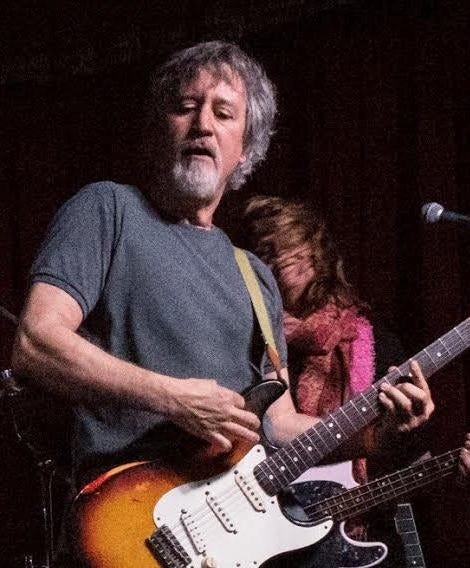
Larry Seaman of Standing Waves talks about the band’s history and more
Frontman of one of Texas’s pioneering 1970s new wave acts chats with Brit Jones.
By Brit Jones
Larry Seaman has performed consistently on the Austin Music Scene since 1978 with a variety of bands, starting with The Standing Waves, where he sang and played guitar. The band stood out from other ‘80s bands in Austin by taking a less aggressive musical approach without sacrificing intensity. Larry was kind enough to answer some questions about his background in art and music.
Brit Jones: You moved to Austin to attend the Art program at The University of Texas. What happened with that? Larry Seaman: My family moved to Austin in ‘68 when my dad went to work at the Austin American-Statesman as managing editor. I started playing in bands in high school and have never stopped. I briefly attended UT as an Art major in the mid-’70s.
**What initially drew you to the Austin Music Scene? **At 13, shortly after moving to Austin, I went to a Battle of the Bands at Municipal Auditorium. Hanging out in the lobby, I saw a long-haired, bearded guy walk by wearing cowboy boots, cut-offs & a cowboy hat. I thought, ‘I am not in Abilene now!’ A few minutes later, that guy was on stage playing fiddle in Shiva’s Headband. That was my introduction to the Austin music scene.
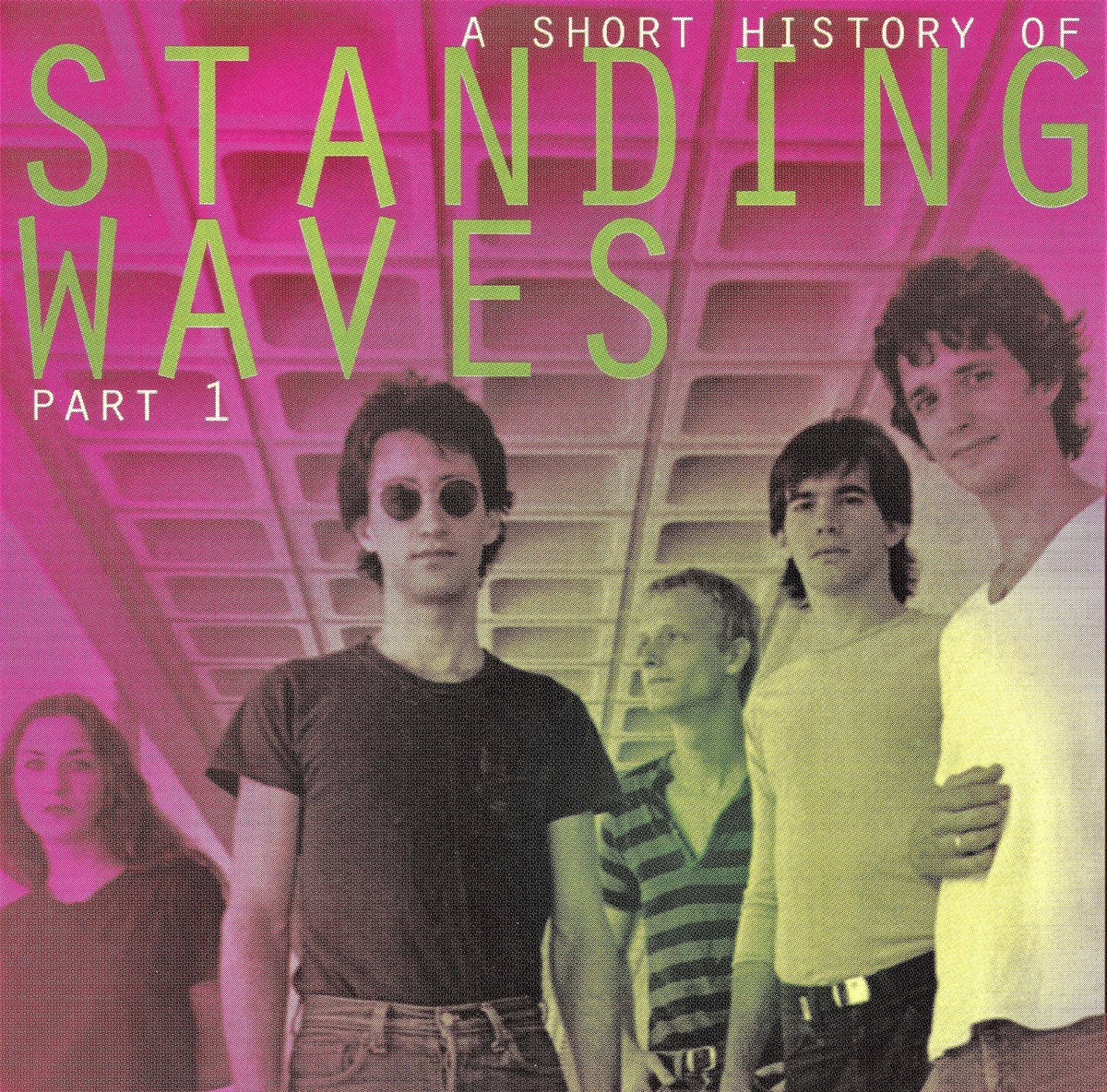
**Your band, The Standing Waves, stood out from the other punk bands of the late 1970s and early ‘80s: while other bands were playing loud, aggressive music, you were playing, for lack of a better term, New Wave. What led you in that direction? **Standing Waves were more melodic than some of the bands on the scene, ‘arty’, ‘quirky,’ more angsty/nervous tension than straight-up aggression, so yeah, ‘New Wave’. We also had three songwriters, so ‘diverse’ as well.
**How did the band get together? **By the mid-70s, my tastes had changed away from mainstream rock. I was listening to the Velvet Underground, Eno, Modern Lovers, and reading about CBGB. In the summer of 78, I went to see the Skunks and the Next at Raul’s, and that was it. I enlisted two friends: David Cardwell on bass, and Shona Lay, a classically trained pianist, on organ. Our first gig was at the Texas Union Ballroom opening the Huns post-bust gig. I found the term standing waves in my Physics textbook, though we were billed as the Latent Homos. It was also the first gig for Terminal Mind, billed as Red, and Chris Wing (STB/Jerryskids) solo. By the end of 78, our lineup solidified with Bob Murray on drums and Randy Franklin on guitar.
**You played extensively around Texas. What kind of responses did you get in Austin and other cities around Texas that you played? **Initially, we played the Island in Houston and the Hot Klub in Dallas, if memory serves. The Island was pretty edgy, and once, actually scary, trying to avoid a confrontation with an agitated guy fresh out of prison. One of the venues in Dallas was in the former location of Jack Ruby’s club. We also played Killeen, San Antonio, San Marcos, Port Aransas, Manor Downs. Two memorable Houston gigs: a double bill with the Big Boys at a disco, and opening for Blondie at the Music Hall (where the symphony played). After some initial consternation at the early gigs, we were usually well-received; open hostility was rare. In Port Aransas, they asked us not to play the second night of the gig. We said okay, but you still have to pay us (we had a contract!) We agreed to work up a couple of Stones and Kinks songs for their regulars.
**What were some of your favorite venues to play, and pertinent to the preview question, how were you received? **Favorite venues were Raul’s, Dukes Royal Coach Inn, Club Foot, and the Armadillo World Headquarters. The first time at the Armadillo, the crew seemed wary of us, but we got an encore and won them over with 96 Tears.
“The Wheel” - Assemblage art by Larry Seaman, 22”x16”x5”
About Brit Jones:
Brit Jones spent 35 years in Austin, TX, ostensibly to attend The University of Texas, but he got his real education by immersing himself in the Austin music scene. During that time, he played guitar in punk, rockabilly, and country bands and met a ton of interesting people; he later played with national acts ranging from mediocre one-hit wonders to those with staying power and real success. In 2019, out of gas, he relocated to Houston with his little dog Maya. But music has a way of sinking its hooks in, and he now travels to Austin to play with old bandmates and, of course, write for this fine publication.

